Across the diverse landscapes of Latin America, from the Atacama Desert in Chile to the altiplano of Bolivia, a new breed of contractor is emerging. These are agile, small-to-medium enterprises taking on projects that range from remote road repairs to urban infill housing. Their challenge is universal: they face the same concrete quality demands as large multinationals but operate on shoestring budgets with high variability in project locations. The solution increasingly lies in the strategic adoption of mobile concrete batching plants(planta de concreto móvil). This article explores how small contractors in Chile, Bolivia, and beyond can balance equipment investment with production capacity by leveraging mobility, ensuring they remain competitive without overextending financially.
The Economic Landscape for Small Contractors
The construction sector in Latin America is notoriously cyclical, with payment terms that can stretch for 60 to 90 days. For a small contractor, capital tied up in heavy, immobile equipment is capital that cannot be used for new bids or payroll. The traditional model of building a fixed ready mix concrete plant requires significant land acquisition, permitting, and civil works—a barrier to entry for many. This is where the value proposition of mobility becomes most apparent. A mobile plant allows a contractor to bring the factory to the project site, eliminating the cost of trucking concrete over long distances, which is particularly vital in countries with challenging topography like Bolivia and Chile.
Defining the Mobile Concrete Plant Advantage
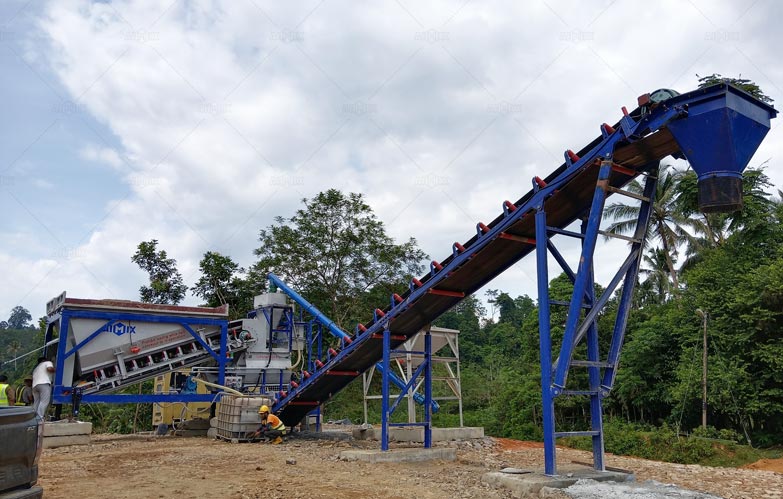
A mobile concrete plant is not simply a smaller version of a stationary plant; it is a rethinking of the production workflow. These units are designed with wheeled axles and a fifth-wheel hitch, allowing them to be towed by a standard semi-truck. Setup time is reduced from weeks to days, or even hours. For the contractor working on a six-month highway project in northern Chile, this means the plant can arrive, be commissioned, and start producing concrete within a week, and then be moved to the next site without leaving a concrete foundation behind.
Key Features of Modern Mobile Units
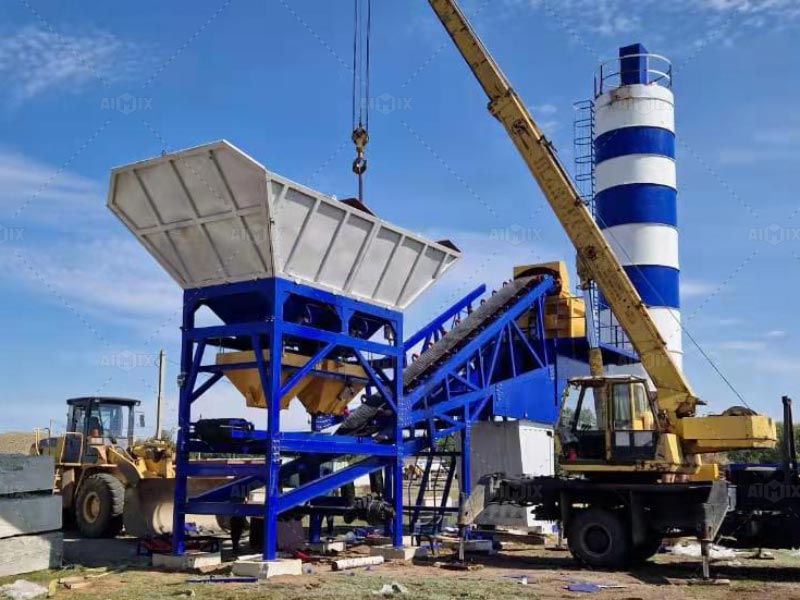
Today’s mobile plants are not a compromise on quality. They often include integrated cement silos, computerized weighing systems, and dust control features that rival stationary plants. The primary difference is the compact footprint and the fact that the control cabin, silo, and mixer are all mounted on a single chassis. This design is particularly well-suited for the narrow, winding roads found in the Andean regions, allowing access to sites that would be unreachable for larger, modular plants.
Case Study: Mobile Solutions in Chile
The Chilean market is unique due to its length and seismic activity. A contractor might win a contract to rebuild a bridge in the north, followed by a residential project in the central valley. Hauling concrete from a fixed central plant is often economically unfeasible. For cocrete plants in Chile(plantas hormigoneras en Chile), the trend is shifting towards mobility. A small contractor investing in a 30-40 m³/h mobile unit can bid on projects across multiple regions. They are no longer confined to a 50-kilometer radius. This geographical flexibility directly translates to a steadier workflow, as they can pivot to where the infrastructure spending is hottest, following mining booms or reconstruction efforts after natural disasters.
Overcoming Altitude and Terrain
Operating in Chile, especially near the mining operations in the Andes, requires equipment that can handle high altitude and temperature variations. A mobile plant destined for this environment must have robust hydraulics and engines. Contractors must look for plants with components that are easily serviceable in regional towns, avoiding the need to fly in technicians from Santiago for every breakdown. The ability to quickly relocate also means that if a project in the Atacama region is delayed, the plant can be moved to a coastal project without incurring the cost of a prolonged idle period.
The Bolivian Context: Infrastructure and Self-Sufficiency
Bolivia presents a different set of challenges and opportunities. With a heavy focus on infrastructure connecting the lowlands of Santa Cruz to the highlands of La Paz, projects are often far from established concrete suppliers. Owning a concrete plant in Bolivia(planta de concreto en Bolivia) has historically meant a massive capital outlay for a fixed installation. However, for the road-building contractor, a mobile plant solves the supply chain issue. They can set up the plant at a quarry near the project’s mid-point, produce concrete for culverts and bridge abutments, and then pack up and follow the road as it progresses.
Navigating Import and Logistics in Bolivia
For contractors looking at a concrete plant in Bolivia, the import process is a critical consideration. Landlocked countries face higher logistics costs for heavy equipment. A mobile plant, being a single self-contained unit, can sometimes simplify the shipping and customs process compared to a multi-container stationary plant. Furthermore, the lower weight and compact dimensions can result in significant savings on overland transport from ports in Chile or Peru. This initial cost saving is vital for contractors operating on the thin margins typical of Bolivian public works.
Financial Modeling: Balancing Output and Cost
The decision to purchase a mobile unit ultimately comes down to the return on investment. For a contractor currently buying concrete from a third-party ready mix concrete plant, the math is simple. If the cost per cubic meter of delivered concrete is high due to transport distances, owning a mobile plant can reduce that cost by 20-30%, paying for itself within one or two large projects. The key is to accurately forecast the concrete volume needed over the next 24 months. If the project pipeline is fragmented—multiple small jobs in different locations—a mobile plant is undeniably superior. If the work is a single, large, multi-year project near a major city, a small stationary plant might be more efficient.
The “Sweet Spot” of Capacity
What is the ideal size for this market? Experience across Chile and Bolivia suggests that a mobile plant producing between 30 and 50 cubic meters per hour hits the “sweet spot.” It is small enough to be truly mobile (towed without special permits in many jurisdictions) but large enough to handle the peak demands of commercial slabs, foundations, and municipal infrastructure. This capacity range allows a contractor to replace the output of a small ready mix concrete plant(planta de concreto premezclado) without the overhead of a large permanent facility.
Operational Strategies for Maximum Utilization
Owning the equipment is only half the battle. To truly balance limited budgets with high capacity, contractors must adopt lean operational strategies. This includes training local crews in Bolivia and Chile to handle the setup and tear-down of the mobile plant, rather than relying on foreign technicians. It also means standardizing the mix designs as much as possible to reduce clean-out times between projects. Some contractors are even using their mobile plants to produce concrete for local communities near their project sites, creating an additional revenue stream during project lulls.
Conclusion: Mobility as a Competitive Edge
For the small contractor looking at cocrete plants in Chile or a new concrete plant in Bolivia, the mobile option is no longer a niche product but a strategic imperative. It democratizes access to high-quality concrete production, allowing smaller players to compete with established ready-mix giants. By matching the plant’s mobility to the fragmented nature of Latin American project cycles, contractors can ensure their equipment is always an asset, working for them, rather than a fixed cost draining their limited budgets. In a market defined by its volatility and geographic diversity, mobility is the key to unlocking consistent profitability.